
- Key Takeaways
- Part 1. Learn about drone battery
- Part 2. Drone battery types explained
- Part 3. Drone battery capacity and real flight time
- Part 4. How long does a drone battery last?
- Part 5. What drone has the most battery life?
- Part 6. Drone battery voltage explained
- Part 7. Drone battery weight & size
- Part 8. Does the charger affect drone battery life?
- Part 9. How weather impacts drone battery performance
- Part 10. Is a lithium polymer battery still the best choice in 2026?
- Part 11. How you can extend your drone battery life
- Part 12. FAQs
Key Takeaways
- Drone battery life depends more on battery type and usage than on brand alone
- Lithium polymer batteries remain the most common choice for drones in 2026
- Higher capacity does not always mean longer flight time
- Proper charging and storage can significantly extend battery lifespan
Part 1. Learn about drone battery
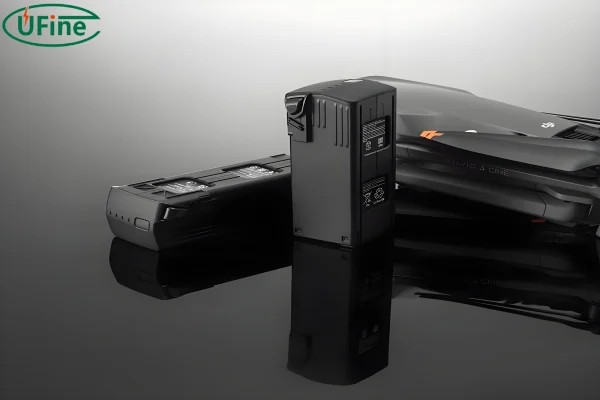
A drone battery is a high-performance rechargeable power source designed specifically for unmanned aerial vehicles (UAVs). Unlike standard consumer batteries, drone batteries must deliver high discharge rates while remaining lightweight and safe.
Drone batteries are engineered to support:
- Rapid acceleration and stable hovering
- Lightweight flight requirements
- High current output without voltage drop
Because drones rely entirely on battery power during flight, the battery directly affects flight time, payload capacity, and operational safety.
Part 2. Drone battery types explained
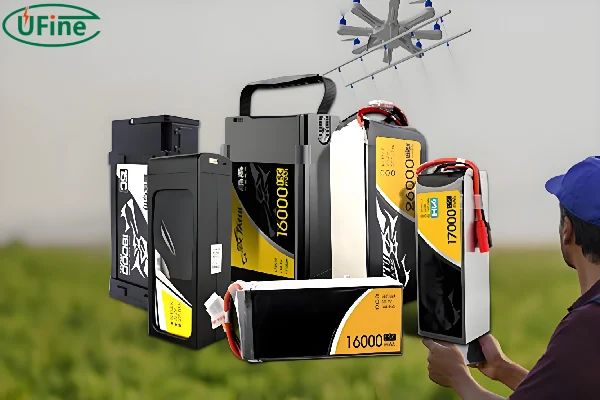
Let’s simplify this. Although several battery chemistries exist, only a few are truly relevant for drones today.
1 Lithium Polymer (LiPo) Battery for Drones
Lithium polymer batteries are the most commonly used batteries in drones today.
Why LiPo batteries dominate drones:
- High energy density for longer flight time
- High discharge rates suitable for powerful motors
- Lightweight and flexible form factors
Limitations:
- Sensitive to overcharging and deep discharge
- Shorter cycle life compared to lithium-ion batteries
LiPo batteries are ideal for consumer drones, racing drones, and aerial photography drones where power and agility are essential.
2 Lithium-Ion (Li-ion) Drone Batteries
Lithium-ion batteries are increasingly used in drones designed for endurance rather than agility.
Advantages:
- Longer lifespan (more charge cycles)
- Higher energy density per cell
Drawbacks:
- Heavier than LiPo batteries
- Lower discharge rates
Li-ion batteries are commonly found in long-range or industrial drones that prioritize extended flight time.
3 LiFePO4 Drone Batteries
Lithium iron phosphate batteries are known for safety and durability.
Key features:
- Excellent thermal stability
- Long cycle life
- Lower fire risk
However, their lower energy density makes them less suitable for most consumer drones.
4 Solid-State and Future Drone Batteries (2026 Outlook)
Emerging technologies such as solid-state batteries promise higher energy density and improved safety. While not yet widely available for consumer drones, they represent the future of drone battery technology.
5 Drone Battery Types Comparison
| Battery Type | Energy Density | Weight | Battery Life | Typical Use |
|---|---|---|---|---|
| LiPo | High | Light | Medium | Consumer & racing drones |
| Li-ion | Very High | Medium | Long | Long-endurance drones |
| LiFePO4 | Medium | Heavy | Very Long | Industrial & safety-focused use |
| Solid-State | Very High | Very Light | Very Long | Future drone applications |
Part 3. Drone battery capacity and real flight time
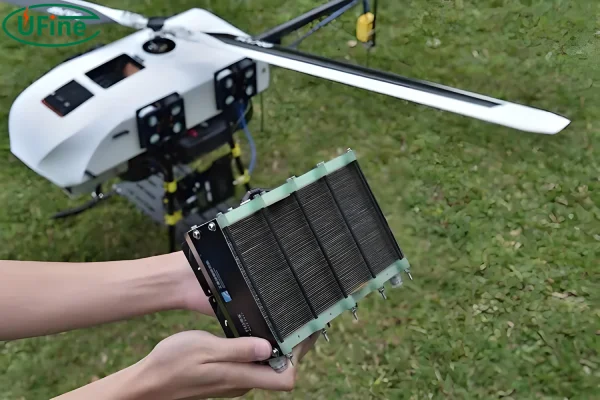
Drone battery capacity, measured in milliampere-hours (mAh), indicates how much energy a battery can store. However, higher capacity does not always mean longer flight time.
What Does mAh Mean in Drone Batteries?
- Higher mAh = more stored energy
- Heavier batteries may reduce efficiency
- Motor efficiency, drone weight, and flight style also matter
Average Drone Battery Capacity by Drone Type
| Drone Type | Battery Capacity | Average Flight Time |
|---|---|---|
| Mini Drone | 200–500 mAh | 5–10 minutes |
| Consumer Drone | 4,000–6,000 mAh | 20–30 minutes |
| Professional Drone | 10,000+ mAh | 40–60 minutes |
Part 4. How long does a drone battery last?
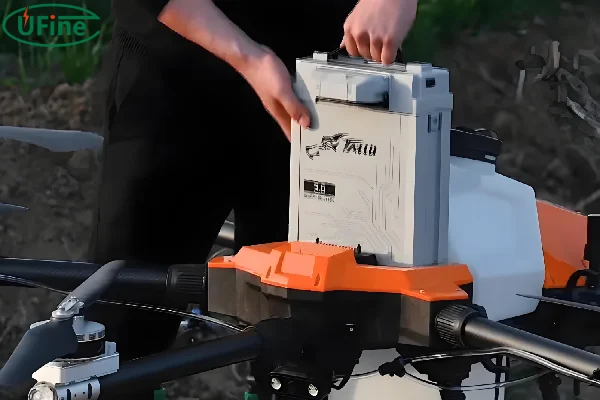
One of the most common questions is how long does a drone battery last.
Average Drone Battery Life Per Flight
- Consumer drones: 20–30 minutes
- Professional drones: 40–60 minutes
Drone Battery Lifespan (Charge Cycles)
Battery lifespan refers to how many full charge cycles a battery can complete before performance degrades.
- LiPo batteries: 150–300 cycles
- Li-ion batteries: 300–500 cycles
Proper charging, storage, and usage habits can significantly extend battery lifespan.
Part 5. What drone has the most battery life?
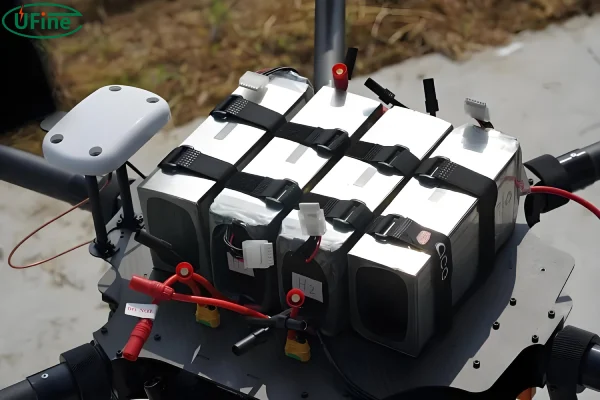
When asking what drone has the most battery life, the answer depends more on battery technology and drone design than on brand.
Drone Types With the Longest Battery Life
- Fixed-wing drones: Extremely efficient and capable of hours of flight
- Hybrid drones: Combine vertical takeoff with fixed-wing efficiency
- Fuel cell drones: Designed for industrial and government applications
Why Battery Technology Matters More Than Brand
Battery chemistry, energy density, and discharge efficiency have a greater impact on flight time than drone brand alone.
Part 6. Drone battery voltage explained
Voltage is a key part of drone battery specifications.
What Is Voltage in Drone Batteries?
Drone batteries are built from cells with a nominal voltage of 3.7V.
- 1S = 3.7V
- 2S = 7.4V
- 3S = 11.1V
- 4S = 14.8V
How Voltage Affects Drone Performance
- Higher voltage increases motor speed and thrust
- Lower voltage reduces power output
- Incorrect voltage can damage electronics
Always match battery voltage to drone specifications.
Part 7. Drone battery weight & size
Battery weight affects:
- Thrust-to-weight ratio
- Stability and center of gravity
- Heat dissipation
A larger battery may increase capacity but reduce efficiency if the added weight outweighs the benefit.
When operating drones in hot environments, battery overheating becomes a real risk that can affect both performance and safety—if you want a deeper explanation of why this happens and how to prevent it, you can read our detailed guide on lithium battery overheating here.
Part 8. Does the charger affect drone battery life?
Absolutely. A charger plays a major role in battery health.
Smart chargers balance individual cells, control current precisely, and prevent overcharging. Fast charging can be convenient, but frequent high-speed charging accelerates degradation.
A good rule of thumb is to charge at a moderate rate whenever possible and save fast charging for when you truly need it.
Part 9. How weather impacts drone battery performance
Battery chemistry reacts strongly to temperature. Cold weather reduces capacity and causes sudden voltage drops. Heat, on the other hand, speeds up chemical aging and increases safety risks.
Whenever possible, keep batteries within their recommended temperature range before and during flight.
Cold weather doesn’t just reduce flight time—it can fundamentally change how lithium batteries behave, so if you’re flying in winter or storing batteries in low temperatures, this article on whether lithium batteries can freeze is worth checking out.
Part 10. Is a lithium polymer battery still the best choice in 2026?
For most drones, yes. Lithium polymer batteries remain the best all-around option because they deliver strong power without excessive weight.
However, if your priority is maximum endurance rather than performance, lithium-ion batteries may be worth considering. The best choice ultimately depends on how you fly, not just what you fly.
Part 11. How you can extend your drone battery life
Charging Tips
- Avoid overcharging
- Use balance chargers
Storage Tips
- Store at 50–60% charge
- Keep batteries cool and dry
Flight Behavior Tips
- Avoid full discharge
- Reduce aggressive maneuvers
- Minimize payload weight
Part 12. FAQs
Can you use a higher voltage battery on a drone?
Using a higher voltage battery than recommended is risky. It can overheat motors, damage the ESC, and shorten your drone’s lifespan. Always match voltage to manufacturer specifications.
Why does my drone battery drain faster after a few months?
Battery performance naturally declines over time due to chemical aging. Frequent fast charging, deep discharges, and high temperatures can accelerate this process significantly.
Is it bad to leave a drone battery fully charged?
Yes. Storing a drone battery at 100% charge for long periods increases internal stress and speeds up degradation. Partial charge storage is healthier for lithium batteries.
Can drone batteries lose capacity even if not used?
Yes. Drone batteries slowly lose capacity over time, even when unused. This is called calendar aging and is affected by storage temperature and charge level.
Why do drone batteries perform worse in cold weather?
Cold temperatures slow down the chemical reactions inside lithium batteries, reducing available power and causing voltage drops during flight.
Related Tags:

More Articles

JST vs Molex: The Right Battery Connector Choice
JST or Molex for your battery? Learn how connector selection affects current, voltage drop, reliability, and device performance.
Custom Battery Pricing: Costs Manufacturers Don’t Mention
A low battery quote may not be the final cost. Discover common hidden expenses that affect custom lithium battery projects.
Battery Wire Length: Hidden Cause of Power Loss
A longer battery wire can cause voltage drop, power loss, and unstable operation. Learn how wire length affects battery performance.
How Device Sleep Modes Affect Battery Life
Think sleep mode extends battery life? Learn why devices still drain power and how firmware, hardware, and batteries affect runtime.
LiPo Battery and PCB Design: Clearance, Insulation, and Placement
Learn how to optimize LiPo battery PCB clearance, insulation, placement, wiring, and thermal design—and avoid common integration mistakes.


