- Key Takeaways
- Part 1. What is low battery in lithium-ion batteries?
- Part 2. Why lithium battery low voltage matters
- Part 3. Common causes of low batteries in lithium-ion systems
- Part 4. How to handle a lithium-ion low battery situation
- Part 5. Long-term lithium battery health strategies
- Part 7. FAQs about low batteries
Modern electronics—from smartphones and laptops to drones, e-bikes, and industrial equipment—depend on lithium-ion batteries. When a device shows a low battery warning, it usually means the battery voltage is approaching the minimum safe operating level.
Understanding lithium battery low voltage behavior is important for device reliability, battery lifespan, and safety. If a battery is repeatedly discharged too deeply, it may lose capacity or become permanently damaged.
This guide explains how low a lithium battery can go, what voltage counts as “low,” the common causes of low batteries, and how to protect lithium-ion battery health.
Key Takeaways
- A lithium-ion low voltage condition typically occurs when the battery falls to 3.0–3.3 V per cell, depending on the chemistry and device design.
- Discharging a lithium battery below its minimum cutoff voltage (usually ~2.5–3.0 V) can cause irreversible capacity loss or safety risks.
- High discharge loads, extreme temperatures, and aging cells are common reasons for low lithium battery voltage.
- Battery management systems (BMS) normally shut down devices before reaching dangerous low-voltage levels.
- Proper charging habits, moderate temperatures, and avoiding deep discharge cycles help extend Li-ion battery life and performance.
Part 1. What is low battery in lithium-ion batteries?
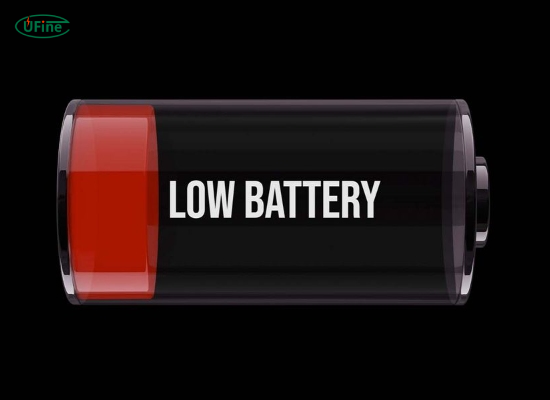
A low battery in a lithium-ion system means the battery’s voltage has dropped close to its lower operating limit. Lithium-ion batteries do not discharge linearly like alkaline batteries. Instead, they maintain stable voltage for most of the cycle and then drop quickly near the end.
Typical Lithium-Ion Voltage Range
| Battery State | Voltage (per cell) |
|---|---|
| Fully charged | 4.2 V |
| Nominal voltage | 3.6–3.7 V |
| Low battery warning | ~3.2–3.4 V |
| Device shutdown | ~3.0 V |
| Deep discharge (unsafe) | <2.5–2.8 V |
For example:
- A 3.7 V lithium battery may trigger a low battery warning around 3.3 V.
- Many 3V lithium batteries (commonly used in electronics) are considered depleted near 2.5–2.7 V.
These thresholds vary by chemistry and device design.
Part 2. Why lithium battery low voltage matters
When a lithium battery reaches low voltage, several changes occur.
1 Reduced device performance
Lower voltage means less available power. Devices may:
- Reduce processing speed
- Disable high-power features
- Shut down completely
This behavior protects the battery from damage.
2 Capacity loss over time
Repeated deep discharges accelerate battery aging. The electrolyte and electrode materials degrade faster, reducing the battery’s ability to store energy.
3 Risk of over-discharge
If a battery falls below its minimum voltage, over-discharge occurs. This can cause:
- Copper dissolution inside the cell
- Increased internal resistance
- Permanent capacity loss
- Safety issues such as swelling
For this reason, most lithium batteries include a Battery Management System (BMS) that stops discharge before the dangerous region.
For safety standards governing lithium batteries, see UN transport testing guidelines from the UN Manual of Tests and Criteria (UN38.3).
Part 3. Common causes of low batteries in lithium-ion systems
Low battery warnings are normal during use, but frequent low-voltage events may indicate operational issues.
- High Discharge Rates
Devices that draw high current—such as drones, power tools, or e-bikes—can drain lithium batteries quickly. High current loads accelerate voltage drop, increase internal heating, and reduce effective capacity. - Deep Discharge Cycles
Running a battery to 0% repeatedly stresses lithium cells. Unlike some older battery types, lithium batteries do not benefit from full discharge cycles. Deep discharge can shorten battery lifespan, increase internal resistance, and cause long-term capacity loss. - Overcharging or Poor Charging Control
Although most modern devices prevent overcharging, poorly designed charging circuits can degrade cells. A high voltage or uncontrolled charging profile may stress electrode materials, accelerate chemical aging, and reduce total cycle life. - Temperature Extremes
Temperature strongly affects lithium battery voltage behavior.
| Condition | Effect |
|---|---|
| High temperature | Faster chemical degradation |
| Low temperature | Temporary voltage drop |
| Extreme cold | Reduced power output |
Operating lithium batteries outside 0–45 °C can lead to faster capacity loss.
- Environmental Factors
Moisture and humidity can affect battery packs if sealing is poor. Possible impacts include corrosion on connectors, internal short circuits, and reduced insulation performance. Proper storage conditions reduce these risks.
Part 4. How to handle a lithium-ion low battery situation
When a low battery warning appears, proper handling helps prevent long-term damage.
1 Use the correct charger
Always use chargers designed for the battery’s chemistry and voltage. Poor-quality chargers may supply unstable voltage, lack protection circuits, and damage lithium cells.
2 Recharge before deep discharge
For best battery health, recharge when the battery reaches 20–30% capacity instead of waiting for 0%. This practice significantly increases cycle life.
3 Charge at moderate temperatures
Lithium batteries charge most efficiently between 20–25 °C (68–77 °F). Avoid charging when the battery is frozen or the device is extremely hot.
4 Monitor charging behavior
Disconnect the charger if you notice unusual heat, swelling, or charging instability. These symptoms may indicate a failing battery.
Part 5. Long-term lithium battery health strategies
Good usage habits can extend lithium battery life by 30–50% or more.
1 Avoid extreme temperatures
Never leave batteries in hot cars, direct sunlight, or freezing environments. Temperature stress is one of the fastest ways to degrade lithium batteries.
2 Use partial charging
Lithium batteries do not have a memory effect. Partial charging is safe and often beneficial. Maintaining charge between 20% and 80% reduces stress on the electrodes.
3 Store batteries correctly
If storing a lithium battery long term: keep charge around 40–60%, store in a cool, dry environment, and avoid storing fully charged or empty.
For lithium battery safety recommendations, refer to guidance from the National Renewable Energy Laboratory (NREL).
4 Use batteries regularly
Lithium batteries benefit from periodic use. Long-term inactivity can cause slow voltage loss and cell imbalance. If you keep spare batteries, rotate their usage periodically.
Part 7. FAQs about low batteries
How do I know if my lithium battery is low?
Most devices display a low battery warning when the voltage drops to about 3.2–3.4 V per cell. You may also notice reduced device performance or power shutdown.
How low can a lithium battery go?
Most lithium-ion batteries should not discharge below 2.5–3.0 V per cell. Going lower can cause irreversible chemical damage.
What is the low voltage of a 3.7 V lithium battery?
A typical 3.7 V lithium battery is considered low around 3.2–3.4 V and may shut down near 3.0 V depending on the device.
What voltage is a low 18650 battery?
An 18650 lithium-ion battery usually reaches low voltage at 3.2–3.3 V. Most battery protection circuits cut off discharge around 2.5–2.8 V.
What is the voltage of a 3V lithium battery when it is low?
Many 3V lithium batteries (such as coin cells) are considered low when voltage falls below 2.6–2.7 V, depending on the device requirements.
Related Tags:

More Articles
Dead Battery or Device Failure? How to Find the Cause
Think your device is broken? Learn how to tell if the problem comes from battery aging or hardware failure before replacing your electronics.
Why iPhone Duo Uses Two Batteries: The Engineering Behind Foldable Phone Power
Why do foldable phones need two batteries? Explore the engineering challenges behind iPhone Duo’s dual-battery architecture and future battery trends.
Solid-State Batteries: 3 Myths You Need to Know
Solid-state batteries promise safer EVs and longer range, but the reality is more complex. Discover the challenges behind this next-gen technology.
Battery Capacity vs Discharge Rate: The Choice Engineers Face
Higher capacity or higher discharge rate? Learn how to choose the right LiPo battery for longer runtime, stable power output, and better device performance.
Battery Cable Size Guide: Choose the Right Wire Fast
Not sure what battery cable size you need? Learn how to select the right wire gauge, terminal size, and cable for safer, more efficient battery systems.